Log in

+34 977 759833sigef@urv.cat

23th SIGEF Congress

23th SIGEF Congress

Publishing

Publication Opportunities

We are pleased to announce that participants of the SIGEF 2025 Congress will have the opportunity to submit their research for possible publication in special issues of the following journals:

  • Journal of Multiple-Valued Logic and Soft Computing (indexed in Web of Science)
  • Fuzzy Economic Review (indexed in Scopus)

This is a great opportunity to share your work through high-impact international academic journals. Submission guidelines and deadlines will be announced soon.

We would like to remind authors that for the final acceptance of the paper, it is necessary to register on the website. It is important to note that at least half of authors of each paper must register and pay the conference fee.

Starting February 15, the submission form will be available, allowing you to upload and submit your manuscripts.


Read more...

Home page

XXIII SIGEF Congress

"Digital Transformation and Intelligence Systems in Economics and Business"

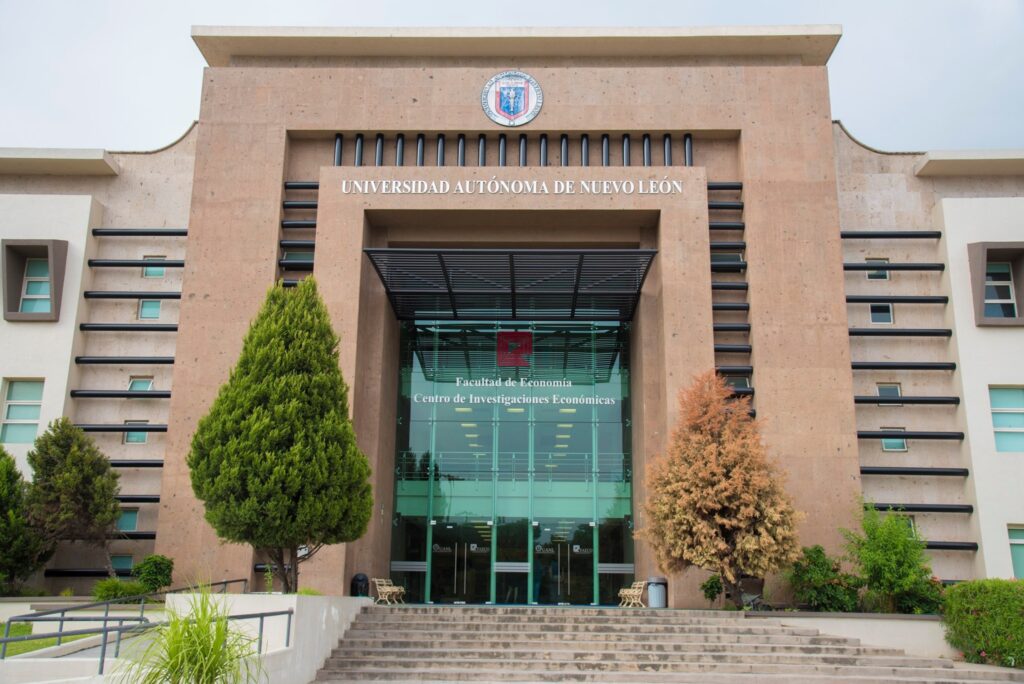
Facultad de Economía, Universidad Autónoma de Nuevo León (México), 7-8th October 2025

The International Association for Fuzzy-Set Management and Economy (SIGEF) is pleased to announce the organization of the XXIII Congress, to take place in México. This Congress is organized by the Universidad Autónoma de Nuevo León (UANL), through Facultad de Economía, and SIGEF.

SIGEF and the Congress offer a forum where academics, professionals and practitioners, working in the field of economics, finance, management and organization, can exchange ideas and experiences on the advancement of research, methods, techniques, application and projects based on fuzzy logic, neural systems, genetic algorithms, and systems, uncertainty theory, complexity theory and soft computing.

The main purpose of the Congress is to stimulate scientific exchanges, promote international cooperation between academic community and companies, and disseminate results of international research.

Contributions describing research results and application papers in the following areas are solicited:

·    Agent-based Modelling and Simulation

·    Applications of Pattern Recognition to Economy and Management

·    Approximate Reasoning

·    Business Intelligence

·    Chaos Theory and Applications in Economy

·    Competencies Management Methods and Practices

·    Complex Adaptive Systems

·    Complexity Science

·    Data Mining and Applications to Economic Problems

·    Decision Making Systems

·    Evolutionary Modelling

·    Fuzzy Expert Systems for Intrusion Detection

·    Fuzzy Games Theory and Applications

·    Fuzzy Logic and Expert Systems in Management

·    Fuzzy Logic in Audit and Security Information

·    Fuzzy Multicriteria Methods & Applications

·       Knowledge Management Methods and Practices

·       Linguistic Information and Decision Making

·       Management Intelligent Systems

·       Management Methods based on Artificial Intelligence

·       Modeling of Economic Processes in Uncertainty

·       Modeling Aggregate Behaviour in Economics

·       Multi-agent systems

·       Network Economics

·       Neural Networks and GAs in Hybrid Systems for Economy and Management

·       Neuro–Fuzzy Models

·       Organizational Modelling

·       Small Firms’ Management Tools

·       Soft Computing in Management Control

·       Software Platforms for the Management of Innovation and Extended Enterprises

·       Technology Transfer from New to Old Economy

Organizers are working to arrange the publication of the best papers. Manuscripts will be selected for potential publication in special issues of two indexed journals.

More information: please visit the website

Read more...

Committees

SCIENTIFIC COMMITTEE

Honorary Chair

Jaime Gil Aluja (Honorary President, SIGEF, Spain)  secretaria@racef.es

Co-Chair

Klender Cortez (Universidad Autónoma de Nuevo León, México) klender@yahoo.com

Martha Del Pilar Rodríguez García (Universidad Autónoma de Nuevo León, México) marthadelpilar2000@yahoo.com

Members

Glòria Barberá Mariné (University Rovira i Virgili, Spain) gloria.barbera@urv.cat

José Manuel Brotons (University Miguel Hernández, Spain) jm.brotons@umh.es

Lorella Cannavacciuolo (University of Naples Federico II, Italy) cannavac@unina.it

Sergio de los Cobos (University Autónoma Metropolitana, Mexico) cobos@xanum.uam.mx

Kurt J. Engemann (Hagan School of Business, Iona College, USA) kengemann@iona.edu

Elena Escrig Olmedo (Universistat Jaume I) eescrig@uji.es

Laura Fabregat Aibar (SIGEF, Spain) laura.fabregat@urv.cat

Mª Ángeles Fernández Izquierdo (Universistat Jaume I) afernand@uji.es

Emma Fernández Loureiro (University of Buenos Aires, Argentina) iemmafl@econ.uba.ar

Joan Carles Ferrer Comalat (University of Girona, Spain) joancarles.ferrer@udg.es

Vasile Georgescu (University of Craiova, Romania) v_geo@yahoo.com

Federico Gonzalez Santoyo (University Michoacana, Mexico) fsantoyo@umich.mx

Maria Belen Guercio (CONICET, Argentina) guerciomb@gmail.com

Kaoru Hirota (Tokyo Institute of Technology, Japan) hirota@bit.edu.cn

Luca Iandoli (St. John’s University, USA) iandolil@stjohns.edu

Janusz Kacprzyk (Polish Academy of Sciences, Poland) janusz.kacprzyk@ibspan.waw.pl

Lisana B. Martínez (CONICET, Argentina) lisanabelen.martinez@gmail.com

José M. Merigó Lindhal (University of Chile, Chile) jmerigo@fen.uchile.cl

Javier Montero (University Complutense of Madrid, Spain) monty@mat.ucm.es

Vesa A. Niskanen (University of Helsinki, Finland) vesa.a.niskanen@helsinki.fi

Witold Pedrycz (University of Alberta, Canada) wpedrycz@ualberta.ca

Cristina Ponsiglione (University of Naples Federico II, Italy) ponsigli@unina.it

Manuel Enrique Sansalvador Sellés (University Miguel Hernández, Spain) manri@umh.es

M. Teresa Sorrosal Forradellas (University Rovira i Virgili, Spain) mariateresa.sorrosal@urv.cat

Antonio Terceño (University Rovira i Virgili, Spain) antonio.terceño@urv.cat

José Luis Verdegay Galdeano (University of Granada, Spain) verdegay@decsai.ugr.es

Hernán P. Vigier (University Provincial del Sudoeste, Argentine) hvigier@uns.edu.ar

Ronald R. Yager (Iona College, USA) yager@panix.com

Giuseppe Zollo (University of Naples Federico II, Italy) giuzollo@unina.it


ORGANIZING COMMITTEE

Chair

Joana Chapa Cantú

Co-Chair

M. Teresa Sorrosal Forradellas (University Rovira i Virgili, Spain) mariateresa.sorrosal@urv.cat

Read more...

Submission

 
PREPARE YOUR PAPER FOR SUBMISSION
 
All work must abide by the following specifications:
 

LANGUAGE:

Only papers presented in English are accepted.

 
SOFTWARE
  • Text and tables should be presented in MICROSOFT-WORD for WINDOWS.
  • Equations should be presented in Equation Editor of Microsoft.

TEXT FORMAT

  • Paper: DIN A4 (29.7 cm high and 21 cm wide); Font: Arial 10 cpi; Margins: 3 cm left, right, upper and lower; Page numbering: central; First level title: Capital and bold (Arial 10 cpi); Second level title: Small capital and bold (Arial 10 cpi); Third level title: Lower case and bold (Arial 10 cpi).
  • Tables and Figures should be numbered consecutively in Arabic numerals. They must be referred to in the text.
  • The list of references should be presented at the end of the paper as follows (APA style):

Journal: Last name, F. M., & Last name, F. M. (Year published). Article title. Periodical Title, Volume(Issue), pp.-pp.

Zadeh, L. A. (1965). Fuzzy sets. Information and control, 8 (3)0, 338-353.

Book: Last name, F. M., Last name, F. M., & Last name, F. M. (Year published). Title of book. Publisher.

Dubois, D., & Prade, H. (1980). Fuzzy Sets and Systems. Theory and Applications.Academic Press.

Book chapter: Last name, F. M., & Last name, F. M. (Year Published). Title of chapter. In F. M. Last name, & F. M. Last name (Eds.), Title of book/anthology (pp. Pages). Publisher.

Zadeh, L.A. (2000). Outline of a computational theory of perceptions based on computing with words. In N.K. Sinha, & M. M. Gupta (Eds.), Soft Computing and Intelligent Systems: Theory and Applications (3-22). Academic Press.

  • The authors must be sent two files:

1. Title page should detail the title of the paper, author/s, corresponding author, email/s and full institutional affiliation/s (Department, Faculty, University, postal address) of each author.

2. Manuscript should contain the title (but no reference to the authors), abstract (between 100 and 180 words), up to 7 keywords, between 2 and 4 classification codes according to the Classification System for Journal Articles as used by the Journal of Economic Literature, and the full text of the paper.


Read more...

General Information

Universidad Autónoma de Nuevo León

The Universidad Autónoma de Nuevo León (UANL) is the third largest university in Mexico and the most important public institution of higher education with the largest number of academic programs in the northeast of the country

Currently, the UANL has more than 218,946 students and around 7,055 teachers. It has a presence throughout the State; Its headquarters include six university campuses: University City, Health Sciences, Mederos, Agricultural Sciences, Sabinas Hidalgo and Linares; In addition, the Cadereyta campus is being built in the eastern part of the State. The institution offers 383 educational programs in different modalities, across 64 academic units and 80 campuses.

The UANL has 43 research centers, where hundreds of researchers work (951 recognized in the National System of Researchers).

The Universidad Autónoma de Nuevo León (UANL) was officially founded in 1933, although its origins are more remote, since as of this year there were already its Jurisprudence, Medicine and Pharmacy schools, the Escuela Normal and Colegio Civil. It would be the representatives of these institutions who would submit to the Honorable Congress of the state of Nuevo León the foundation of a shaped university, an event that would finally occur on September 25th, 1933, the date on which it began its activities with an enrollment of 1,864 students and 218 teachers.


Facultad de Economía

The Facultad de Economía at the Universidad Autónoma de Nuevo León (UANL), founded in 1957 with the support of Rodrigo Gómez and Víctor L. Urquidi, is one of the most prestigious economic institutions in Mexico. Its impact extends nationally and internationally due to its academic excellence, industry collaboration, and contributions to economic research.

The Bachelor’s Degree in Economics is nationally and internationally accredited, training economists with a focus on economic theory, quantitative methods, humanities, and finance. The faculty has been recognized for its high academic standards, positioning itself in 1st place among economic schools in Mexico.

This school houses the Center for Economic Research (CIE UANL), with over 60 years of experience in economic consulting and research, reinforcing its leadership in economic analysis and strategic decision-making.

Read more...
Subscribe to this RSS feed

Log in or Sign up